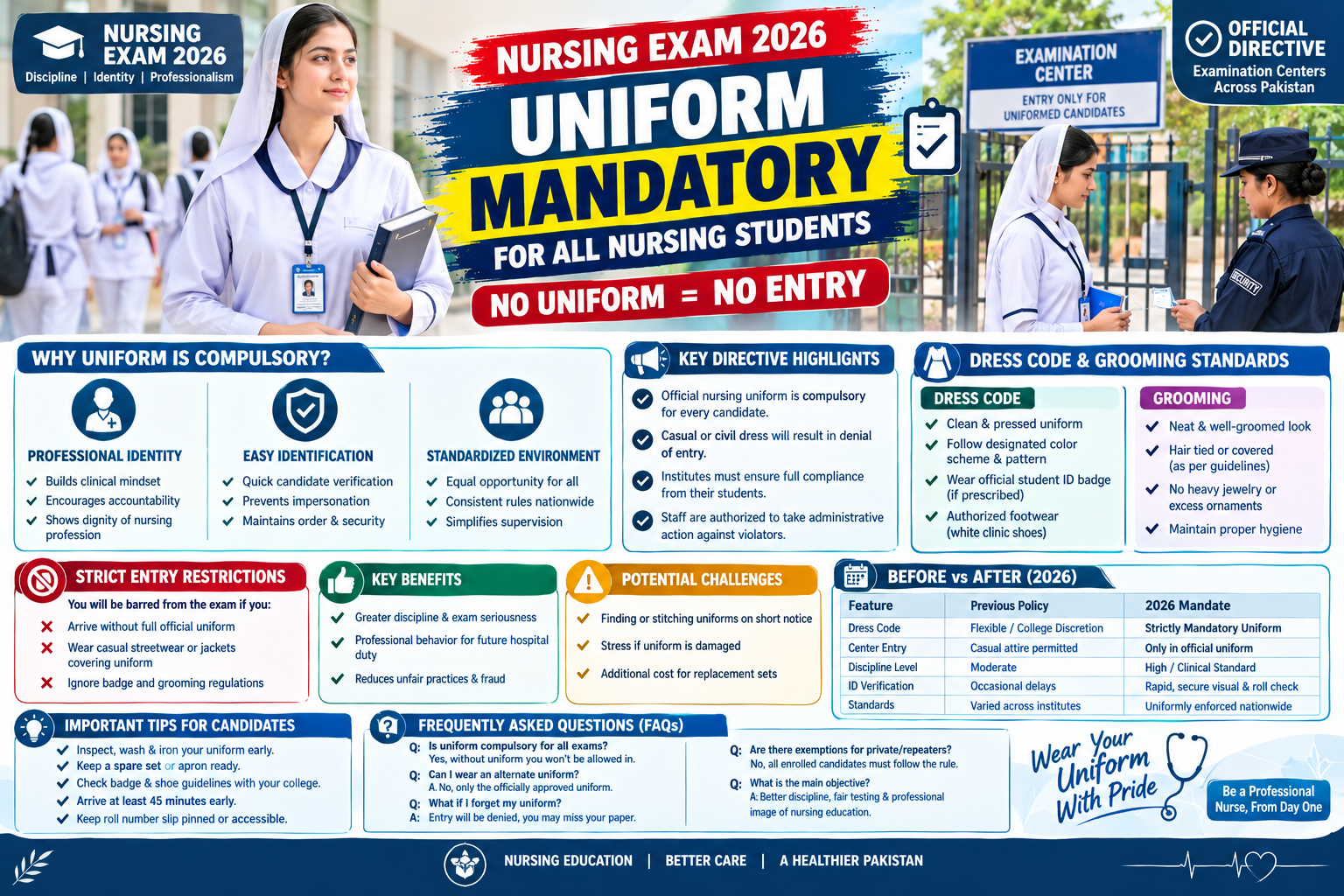
The recent regulatory decision making the official Uniform mandatory for nursing students in the 2026 annual examinations has generated considerable discussion across medical training institutes. According to the latest advisory, candidates will only be granted entry into examination centers if they appear in their institutional nursing uniform. This step is designed to reinforce strict discipline, establish clear student identity, and uphold professional medical standards.
This policy not only safeguards the integrity of the examination environment but also reflects the foundational ethics of healthcare training. Nursing candidates are strongly advised to adhere strictly to these official guidelines, as examination superintendents have been directed to implement entry rules without exception.
Why Has the Nursing Uniform Been Made Compulsory for Exams?
Health and examination boards introduced this mandate to align testing protocols with professional hospital standards:
1. Fostering Professional Identity
- Cultivates a serious, clinical mindset among upcoming nurses
- Instills personal accountability and professional pride
- Projects the dignity and decorum associated with the healthcare field
2. Straightforward Identification
- Enables invigilators and security personnel to verify genuine candidates quickly
- Eliminates risks of impersonation, proxy candidates, or unauthorized visitors
- Helps maintain an orderly, disturbance-free testing environment
3. Standardized Testing Environment
- Creates an equal, distraction-free environment across all test centers
- Establishes consistent standards across public and private nursing colleges
- Assists supervisory teams in streamlining hall inspections
Highlights of the Official Examination Directive
Key instructions emphasized in the latest notification include:
- The official nursing uniform is strictly compulsory for every candidate
- Students appearing in casual or civil dress will face denial of entry at the gates
- Affiliated nursing colleges and institutes must ensure their students comply in full
- Staff have been authorized to initiate administrative action against policy violations
Essential Dress Code and Grooming Standards
Dress Code Requirements
- Wear a clean, neatly pressed institutional uniform
- Adhere strictly to the designated departmental color scheme and pattern
- Fasten your official student identification badge (if prescribed by your college)
- Wear authorized footwear (standard white clinic shoes)
Personal Grooming Guidelines
- Maintain a neat, well-groomed personal appearance
- Keep hair securely tied or covered according to clinical guidelines
- Avoid wearing heavy jewelry, excessive ornaments, or wrist accessories
- Maintain standard hygiene protocols expected of medical trainees
Strict Entry Restrictions
Students will be barred from taking the exam if they:
- Arrive without their full official uniform
- Wear casual streetwear, jackets covering uniforms inappropriately, or alternate clothes
- Disregard established institutional grooming and badge regulations
Potential Impact: Benefits and Practical Challenges
Notable Advantages:
- Promotes high personal discipline and exam seriousness
- Encourages professional behavior consistent with hospital duty
- Substantially reduces unfair practices and examination fraud
Possible Practical Challenges:
- Securing tailored uniforms on short notice for some candidates
- Added stress if a uniform is damaged right before paper day
- Minor additional expenses for students needing replacement sets
Exam Dress Policy: Before vs. After (2026)
| Feature | Previous Policy | Updated 2026 Mandate |
|---|---|---|
| Dress Code | Flexible / College Discretion | Strictly Mandatory Uniform |
| Center Entry | Casual attire generally permitted | Permitted only in official uniform |
| Discipline Level | Moderate | High / Clinical Standard |
| Candidate ID Verification | Occasional delays at entrance | Rapid, secure visual and roll verification |
| Institutional Standards | Varied widely across institutes | Uniformly enforced across all centers |
Helpful Advice for Nursing Candidates
- Inspect, wash, and iron your examination uniform well in advance.
- Keep a clean backup set or apron ready in case of unexpected stains or tears.
- Double-check specific badge and shoe guidelines with your college administration.
- Plan to arrive at the examination venue at least 45 minutes early.
- Avoid last-minute panic by keeping your roll number slip pinned or securely accessible with your uniform.
Frequently Asked Questions (FAQs)
Is wearing a uniform compulsory for all nursing exams in 2026?
Yes, the designated uniform is strictly mandatory. Candidates without it will not be allowed inside the exam hall.
Can candidates wear an alternate or casual uniform?
No, only the officially approved institutional uniform designated by your nursing board or college is permitted.
What happens if a student forgets their uniform on exam day?
Center supervisors have orders to deny hall entry, which may cause the student to miss their paper.
Are there any exemptions for private or repeating candidates?
No official exemptions have been granted. All enrolled nursing candidates must follow the dress code.
What is the main objective behind this rule?
The directive aims to enhance testing discipline, eliminate proxy test-takers, and maintain the professional image of nursing education.
Final Thoughts
The compulsory uniform policy for nursing examinations in 2026 marks a decisive move toward improving discipline, fairness, and professional decorum. Students are advised to prepare their attire beforehand and follow all administrative instructions closely to ensure a smooth, worry-free exam experience.